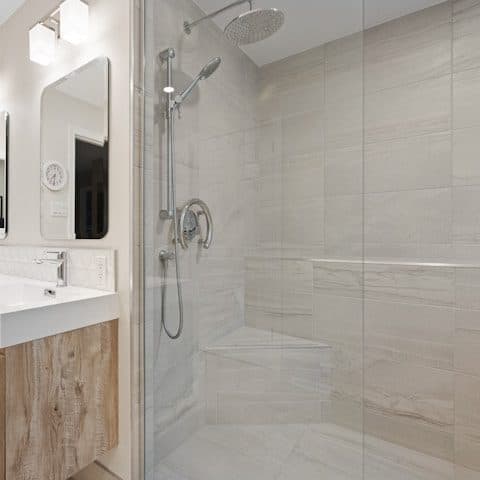
Travertine has a reputation for being high-maintenance. It is not. It simply asks to be understood, and then largely takes care of itself. Here is everything you actually need to know before, during and after installation.
What travertine actually is
Travertine is a natural limestone formed by mineral springs. Those characteristic small pits and channels are part of the stone, not flaws. They can be left open for a raw, tactile finish, or filled and honed for a smoother, more uniform surface. Both are correct. The choice is aesthetic, and it changes how the floor behaves underfoot.
Sealing, the one job that matters
Travertine is porous, so it needs an impregnating sealer on installation and a light refresh roughly once a year in wet areas. A sealed surface resists staining from wine, coffee, oil and cosmetics, and gives you time to wipe spills before they reach the stone. This single habit is the difference between a floor that ages beautifully and one that does not.
Sealed once on install and refreshed yearly, a travertine floor will quietly outlive most of the things around it.

Everyday cleaning
Warm water and a pH-neutral stone cleaner are all you need. Dust or vacuum first so grit is not dragged across the surface, then mop and dry. Avoid letting water pool in the open pits of an unfilled finish.
What to avoid
Never use acidic cleaners: vinegar, lemon, or generic bathroom sprays will etch the surface and leave dull marks that are difficult to reverse. Skip abrasive scourers and steam cleaners. If a stain does set, a stone-specific poultice will usually lift it without professional help.